Thursday, 19 June 2014

Scotland risks deep splits with bitter independence debate

Towards the end of April, acclaimed composer James MacMillan – I can heartily recommend his hauntingly beautiful Miserere, a successor to Allegri’s masterpiece – wrote, in a somewhat withering essay in The Scotsman that he, along with other prominent Scottish artists, were keen to keep their views on Scottish independence private.

The main target of his piece (found here) were those Scottish artists who have aligned themselves with the Yes campaign, and failed, in his view, to consider, or understand, the full implications of such a decision – or to be willing to countenance the views of others.

In the crucial passage of his essay, he warns:

‘Youthful idealism or patriotism can sometimes give succour to dark, lurking forces in our collective psyche… artists can be good in society, but we can see that some of them end up supporting evil, blind to the roots and inevitable ends of their thinking’.

He mentions, in particular, the National Collective, the pro-independence alliance of artists.

‘A visit to their website shows them to be young, shouty and completely unquestioning about their cause. Some worry that their black-and-white perspective on things may damage the quality of their work. Some of their poetry seems risible and thin, and certainly light on nuance and subtlety. Are they simply producing propaganda masquerading as art?’

Singled out for criticism was the writer Alan Bissett and his ‘monologue Vote Britain’ in which he, MacMillan claims, stereotypes ‘the English “Establishment” and Conservative voters’ – a typical passage reads:

‘Vote for Robert Burns being called by Paxman ‘sentimental doggerel.
Vote for The Iron Lady. Such a strong leader, gave this country backbone
(you didn’t really want the unions, industries or council homes, just made the place look tatty’).

The full poem can be found here

MacMillan detects ‘crass rabble-rousing’ in the piece and says Bissett’s earlier work is ‘much better’. And he warns that artists such as Bissett ‘are putting off the whole debate and having a negative effect on everyone else too’. Indeed, he compares artists’ commitment to the Yes campaign with the Scottish 20th century poet Hugh MacDiarmid’s flirtation with Fascism.

It was hardly surprising that MacMillan’s caustic text prompted quite a reaction. Bissett replied:

‘If MacMillan believes art and politics shouldn’t mix, that’s up to him, although I would find it odd if Scottish artists had nothing to say about the seismic changes their country is undergoing. For me, the world would be poorer place without the likes of Orwell, Steinbeck, Atwood, Zepheniah, Angelou, Morrison, Loach, Picasso and countless others politicising their art to challenge the official narratives of the powerful. In this case, the powerful is an increasingly cold, elitist and unequal British state, which the majority of artists believe Scotland, if given the chance, can improve upon.’

How he can be sure what the ‘majority of artists in Scotland’ believe, I am not entirely sure.

It is not hard to castigate MacMillan in going so far as to suggest that supporting the SNP was backing ‘evil’ or approximating Fascism. And surely he did not mean to imply that art should never be political. But, his warning about the dangers public figures face when putting their heads above the parapet in this debate has to be taken seriously. It was explicitly highlighted last week when Harry Potter author, JK Rowling, announced she was backing the No campaign, in the process giving the cause £1million. The writer was subjected to a vile torrent of abuse, Ms Rowling being called a ‘Union cow bag’, a ‘traitor’ and a ‘whore’. One wrote on Twitter, with almost impressive colour, ‘fuck jk Rowling and that wee gadge harry potter’.

And just last week, though less noticed outside of Scotland, Alex Salmond’s own senior political adviser, Campbell Gunn, was drawn into this ugly side of campaigning after Clare Lally, a mother of two-year-old twin girls, one of whom has cerebral palsy, found herself under attack for speaking at a Better Together campaign.

Ms Lally, who became a ‘Carers Champion’ in the  Scottish Labour back in 2012, appeared the conference saying she was ‘just an ordinary mum from Clydebank campaigning for Scotland to stay in the UK’ and she explained how grateful she was to health care workers for the attention her daughter received.

Mr Gunn, however, wrote an email to the Daily Telegraph’s Scottish political editor Simon Johnson saying: ‘You are no doubt aware that the “mother-of-two” who described herself as “just a normal person” …. is actually a member of Labour’s Shadow Cabinet and daughter-in-law of former Labour Lord Provost of Glasgow Pat Lally’: so, by implication, not a normal person at all and certainly not one allowed to have the normal right to an opinion.. Similar accusations appeared on a Nationalist website and, predictably, Ms Lally received typical abuse on Twitter.

Perhaps she should have been more open about her Labour links, but she is not elected and – in speaking about her experience with her own children, surely her views are perfectly valid? Furthermore, she is not, in fact, related to Pat Lally at all. Mr Gunn, who admits to making a mistake, still denies trying to discredit Ms Lally by suggesting she wasn’t such an ordinary mum after all. It is hard, however, to come up with any other explanation for his rushing into such a crass mistake.

Throughout the campaign, the level of debate has never been great – altogether too ‘shouty’, simplistic, negative and patronising on both sides – but with this level of abuse, any sensible discussion is becoming severely restricted. And are we beginning to see that in the development of such polarised opinions, potentially more damaging splits, with long-term implications, are being nurtured in Scottish society and between the English and Scots? That a No campaigner can be depicted as a traitor for simply holding a different opinion is a shocking intrusion in what should be a civilised debate, especially on such a crucial issue. We are in danger of creating deep fissures between peoples who have lived together, in amity and rivalry, for centuries.


Wednesday, 11 June 2014

'Thou doth protest too much'


An overly keen graphics operator within Oxfam probably got a bit of the hairdryer treatment today. The tweet which emerged from the campaigning charity provoked, if not a ‘perfect storm’, then certainly an unwelcome squall after listing a series of policies which, some may feel, are penalising those worst off in our society and stem from the current government.

The ‘Perfect Storm’ poster from Oxfam was, in my view, overtly political and it wouldn’t be hard to imagine a Labour Party logo being slapped on one side and banner adverts being pasted up across the UK in time for the next General Election. If I had been in charge, the row over the image would have been an unwelcome and unnecessary distraction from the current campaign highlighting the extremes of poverty in Britain. Having said that, once it was out there, I would have defended it to the hilt.

It was unsurprising, therefore, that several Conservative MPs were incandescent by the poster. Leading the way was Conor Burns, who reported the charity to the Charity Commission

In his letter, Mr Burns wrote:

‘Many people who support Oxfam will be shocked and saddened by this highly political campaigning in domestic British politics.

‘Most of us operated under the illusion that Oxfam’s focus was on the relief of poverty and famine overseas. I cannot see how using funds donated to charity to campaign politically can be in accord with Oxfam’s charitable status’

Another Tory MP, Charlie Elphicke, added:

'Political campaigning by charities like Oxfam is a shameful abuse of taxpayers’ money.’

Well Mr Burns and Mr Elphicke, you are both wrong and staggeringly, possibly wilfully, ignorant of Charity Commission guidelines relating to this issue; it is their time now being wasted.

Here are a few highlights from the Charity Commission's advice (the full guidelines can be found here):

‘Campaigning and political activity can be legitimate and valuable activities to undertake.

However, political campaigning, or political activity, as defined in this guidance, must be undertaken by a charity only in the context of supporting the delivery of its charitable purposes.

Charities can campaign for a change in the law, policy or decisions… where such change would support the charity’s purposes.

However, a charity cannot exist for a political purpose, which is any purpose directed at furthering the interest of any political party….

A charity may give its support to specific policies advocated by political parties if it would help achieve its charitable purposes. However, trustees must not allow the charity to be used as a vehicle for the expression of the political views of any individual trustee or staff member.

A charity can campaign using emotive or controversial material, where this is lawful and justifiable in the context of the campaign. Such material must be factually accurate and have a legitimate evidence base.

The principles of charity campaigning and political activity are the same, whether the activity is carried out in the United Kingdom or overseas.

Not only, therefore, is it perfectly legitimate for Oxfam to campaign politically, it is absolutely fine for them to campaign specifically against particular laws and policies; the location of such a campaign is irrelevant. The key is they cannot campaign for a political party. And, as Oxfam didn't mention a political party, they can argue - and indeed are - that they didn't.

As I said above, I think Oxfam sailed close to the wind and I think they probably realised that; subsequent tweets tried to make clear they were referring to the policies of parties of all colours, such as this one:


As for the Conservative MPs, while they may feel justified in their protests, ultimately it is an exercise in futility; they themselves have launched a party political attack against one of the country's most respected charities. Who is going likely to win over public opinion?

While making their protests known would be reasonable, they would have been wiser not to raise too much of a fuss. The Charity Commission will clear Oxfam and there will be a lingering feeling that these politicians protested just a little bit too much. 

Wednesday, 4 June 2014

Are we against Female Genital Mutilation or not? Part ii

One disturbing point on today’s (June 4) Queen’s Speech, this was a measure announced by Her Majesty:

Serious Crime Bill.

'A serious crime Bill wil be brought forward to tackle child neglect, disrupt serious organised crime and strengthen powers to seize the proceeds of crime.’

And according to the 105-page accompanying document, one of the things the Bill will attempt to do will be to:

‘Strengthen and update laws to protect vulnerable individuals at risk of child cruelty, sexual exploitation and female genital mutilation.’

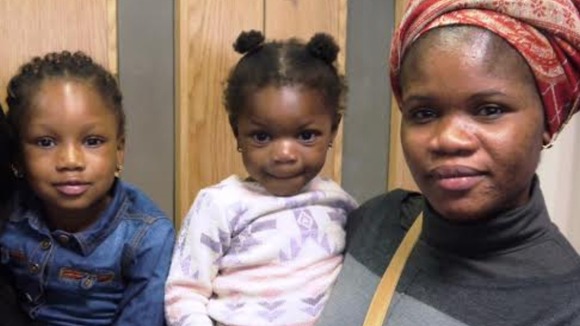
This was all released the morning after Afusat Saliu was deported to Nigeria with her daughters, two and four-years-old, who face the very real threat of FGM from members of her own family. The Home Office was so proud of this deportation they refused to say at what time and which carrier was taking her back to Nigeria. This was done to avoid any further protests or disruption against her deportation, stymying the efforts of campaigners such as Anj Handa, who championed Ms Saliu's case so bravely.

Again I ask, is our government really against this abhorrent practice or not? Surely it’s not just a grim PR stunt. Or maybe just no one has told the Home Office as it blunders, with increasing callousness and incompetence, to try and hit an unachievable immigration target.

A timid launch for timid pub reforms


If the press launch is anything to go by, then tied publicans should be wary of the government’s pub reforms plans.

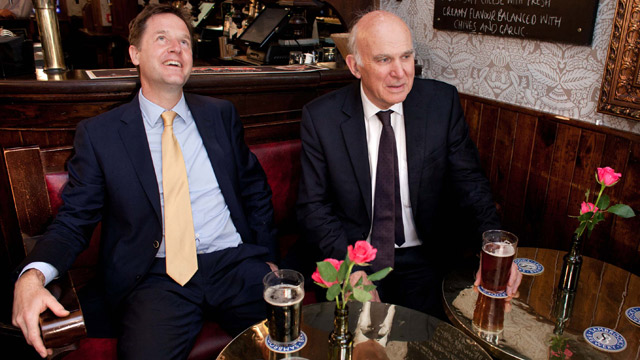
For the first time since the botched coup against Nick Clegg, the Deputy Prime Minster and Liberal Democrat leader met in public with Vince Cable, the business secretary, in a Piccadilly pub to unveil the long-awaited proposals to give tenants a bigger say in negotiations with pubcos - the large, often heavily indebted, property-companies which own about 25,000 pubs across the country.

Such is the level of trust between the two men that the press were kept outside the Queen’s Head, left in the rain, unable to hear a word. All that was released were a few sentences, with Vince Cable saying: ’Far too many landlords feel their income is squeezed by big pub companies, so today we are taking action to make sure they get a fairer deal.’

Even the venue chosen for the launch left a lot to be desired. The Queen’s Head is a very distinguished pub in the heart of the West End, but it is independently owned and, therefore, will not be affected by these proposals.

As for the measures themselves, they are not as sweeping and radical as the campaigners would have hoped. The reforms will allow tenants, tied to companies like Punch Taverns and Enterprise Inns, to request a rent review if they have not had one for five years, and to see the information companies use to increase rents. (For background on the issue, see here)

Tenants would have access to an independent adjudicator who could impose sanctions if a new mandatory code is breached. Tenants would also be able to ask for an assessment to see whether they were better or worse off than free-of-tie tenants.

But there is no market rent option, no relaxation of the tie. Tenants will still face ground rent and be forced to buy supplies through their owners.

The reforms leave the pubcos pretty much as they were. Punch and Enterprise remain ’zombie’ companies, as Greg Mulholland claimed in the House of Commons in 2013. And vocal campaign groups, who many might think would be on the side of tenant publicans, bemoan any intervention by the government.

For example, Brigid Simmonds, the chief executive of the British Beer and Pub Association, said:

'While we welcome greater certainty and clarity after such a long period of debate, we are disappointed that the government is seeking to introduce potentially costly legislation, with the disproportionate costs of a statutory adjudicator, rather than supporting the existing, and evolving, system of self-regulation.'

It would be a tough ask to find any tied publican who would defend the current system of self-regulation.

There will be opportunities as the legislation passes through parliament to amend these fundamentally timid plans and Greg Mulholland, who has been one of the most prominent champions for reform in the House of Commons, has indicated he intends to do what he can. Responding to messages of congratulations, from Lib Dem president Tim Farron, pleased that any proposals were being discussed, Mr Mulholland replied:


We can expect to see the free-of-tie option tabled. It will get the backing of Labour, the Lib Dems and many Tories, so could still force its way into legislation.

But the most significant obstacle facing even these reforms is the fracturing coalition.

While Clegg and David Cameron try and portray an image of back-slapping unity, in truth, this Queen’s Speech sees a series of measures suggested by one side followed by another set from the other. It was noticeable that no Conservative figure has associated him or herself with the pubco measures. George Osborne is certainly nowhere to be seen and the pubs minister Brandon Lewis - who appears to have only a semi-detached relationship with his brief - is invisible. And, of course, there was no Andrew Griffiths MP, who represents Burton, the spiritual home of British brewing, and has spent years campaigning against any such reforms; surely he is not closer to the non-beer making pubcos than the pubs which actually sell the stuff?

While reforms have wide support amongst Tory backbenchers, there is no support from the Conservative benches in government; indeed, the delay to any proposals having been unveiled before now has not been the amount of responses to the consultation, as previously and preposterously claimed, but because of the extensive lobbying campaign by pubcos.

Lib Dem figures accept these measures are very much a ’first step’ - and Labour have already pledged to go further if re-elected - but they face a battle to get even these passed through parliament.

Thursday, 29 May 2014

Are we against Female Genital Mutilation or not?

Are we, as a nation, and is our government, against Female Genital Mutilation or not? Just days ago Nick Clegg described the practice as one of the ‘most extreme manifestations of gender-based violence’. Yesterday, however, Afusat Saliu was arrested by our wretched border force and could be deported tonight, despite the very real threat that her four and two-year-old daughters could become victims of this barbaric abuse.


Ms Saliu, 31, is a Christian woman who fled Nigeria in 2011, while pregnant, after her stepmother threatened to subject her daughter, Bassy, 4, to FGM. Her second daughter, Rashidat, was born here in London. Both will accompany their mother – who was herself a victim of FGM – if she is deported later today (May 29). And there are very real fears that her two daughters will once again face the threat of FGM, she herself could be forced into a marriage or targeted by Islamic militants Boko Haram, especially since she converted to Christianity while living in Leeds.

The threat of FGM is real. Nigeria has the highest numbers of such cases of anywhere in the world (though not the highest as a percentage of population). It is estimated that 41 per cent of women have suffered 'genital cutting'.

Anj Handa, a friend of Ms Saliu, said:

'There is a risk of forced FGM on her two children if they are made to go back to Nigeria.

'Afusat is a victim of that herself. It is too late for her, but we have a four-year-old and a two-year-old and they are the "right age " for cutting from her family's point of view.'

But, reading Nick Clegg's comments at a press conference yesterday, it would seem the government is very much on her side. This is what he said:

'This is one of the most extreme manifestations of gender-based violence there is. it's already illegal here in the UK and in many countries around the world. Yet, despite this, millions of girls are still at risk of FGM. The first thing many of them know about this threat is when one day, terrified, they're physically held down and harmed. What follows is a lifetime of excruciating pain and trauma, serious health issues and, more often than not, dangerous complications in childbirth.'

He went on to say that while we should be sensitive towards other belief systems, they were not an excuse to allow such practices.

'There is a real limit to how much we should seek to understand cultural perspectives of others and the mutilation and cutting of girls with the horrific suffering that comes with it - there is no possible cultural excuse for that kind of practice. None at all.'

Foreign Secretary William Hague, who has been doing some brave and committed, though sadly little noticed, campaigning against rape as a weapon of war, has pushed a £35million DFID project to reduce FGM across the globe. His commitment is unquestionable.

Yet, we are now left in the absurd, disgraceful, situation that another arm of government - albeit one which frequently distinguishes itself through acts of callousness and incompetence - is prepared to deport a mother and her children, knowing that these two, innocent, girls, could well become the next victims of this dreadful activity.

Thus far, more than 120,000 people have signed this petition, calling for a review of the evidence so her case can be judged again. But time is running out. Her supporters fear Afusat Saliu and her family will be put on to a plane at 10pm this evening.


Pathetically, the only response from the Home Office is that it does not comment on individual cases; a phrase that now seeks to excuse authorities from responsibility for the outrages it allows.

Wednesday, 28 May 2014

Plots, polling and pratfalls; the Lib Dems today

In fields, alongside houses, in windows and near stations, placards proclaiming ‘Liberal Democrats Winning Here’ were dotted, er, liberally, around the Westmorland and Lonsdale constituency of Tim Farron, where my family and I were recently holidaying.


I posted a photograph of one erected by a gate alongside a field – near Oxenholme station for the record:

And the tone of the reaction was somewhat mocking; replies included:


And it turned out the Liberal Democrats weren't 'winning here', there or anywhere in the European elections. They managed to hold on to one seat - just, Catherine Bearder in the South East - and their north west MEP, Chris Davies, lost his seat after polling just six per cent of the vote, behind the Greens, despite holding his position since 1999.

What the posters did, of course, was provide a clear demonstration of the tactics the junior coalition party was deploying in a desperate attempt to consolidate its position. Senior Lib Dem figures admitted to me they knew they were going to get a kicking at these elections but it was hoped that by concentrating on traditional strongholds -where they had MPs and MEPs - they might cling on to a handful of positions in Brussels.

Another aspect of the party's plan was represented by the debates with Nigel Farage, the leader of the UK Independence Party (Ukip). Lib Dem leader Nick Clegg deserves some credit for trying to put forward the pro-EU argument - an unpopular position, perhaps, but one held by more people than often appreciated - and in the first debate he did pretty well, despite whatever the results of an instant poll may have found.

But Mr Clegg was appalling in the second debate: argumentative; curt and trying to sound superior. Farage wasn't going to be ruffled and, consummate performer that he is, was able to bat Clegg away. Maybe that was the moment the Lib Dem's campaign fell apart, for, as we now know, these tactics failed to return what was hoped. 

Even with the benefit of hindsight, it is hard to imagine any tactics would have resulted in a different outcome, especially, as now seems clear, the Lib Dem's second most senior figure, Vince Cable, has been on manoeuvres, with his lieutenants apparently testing the ground for a possible putsch.

Lord Matthew Oakeshott - long an irritating splinter for Nick Clegg - quit the party today after he realised he was facing disciplinary measures for polling he had done which indicated his friend Mr Cable would do better in the next General Election than Mr Clegg, if he was leader.

In his resignation statement, Lord Oakeshott warned that the Lib Dems were 'heading for disaster' with Nick Clegg at the helm, as the party had been left with 'no roots, no principles and no values'. More damagingly, Lord Oakeshott indicated that not only had he commissioned the polling, he had also shared the results with Vince Cable, for whom he has long been a highly vocal and visible cheerleader. In his statement he said:

'Several months ago a close colleague, concerned about voting intentions in Twickenham, asked me if I would arrange and pay for a poll to show us Vince's current position and how best to get him re-elected. I was happy to help, and Vince amended and approved the questionnaire, but at his request I excluded question on voting intentions with a change of leader.

'Although Vince has excellent ratings, both as a minister and a local MP, he was slightly behind the Conservatives in this poll, as the full details on the ICM website show.

'That poll worried me so much that I commissioned four more in different types of constituency all over the country and added back the change of leadership question. The results were in the Guardian yesterday and on the ICM website. Several weeks ago, I told Vince the results of those four polls too.'

The business secretary obviously denies being involved in the commissioning of the surveys - and would obviously reject accusations of a plot. He does, though, admit being told 'in general terms what the trends were'. The Business Secretary would have known the election results were likely to be catastrophic and these polls were carried out in April and May this year; the timing is most intriguing.

Clegg's position is not good: his critics are growing at local levels on a daily basis, though not sufficient in number to topple him; and, under his leadership, the Lib Dems do, indeed, seem to be 'heading for disaster', as Lord Oakeshott asserts. But, the revelation of this cackhanded scheming - to describe it as a plot would be too generous - has oddly secured his position until the election. Likely successors - Danny Alexander (though Oakeshott's polling suggests he will struggle to hang on to his seat) and Tim Farron - hardly want to succeed Clegg before the next General Election, knowing what a dismal outcome awaits the party. And Cable, who increasingly doesn't seem to be half as clever as he thinks he is (just think of this humiliating episode with two female Daily Telegraph reporters), may well have finally burned his bridges. Presumptuous plotters rarely prosper in politics.

Wednesday, 21 May 2014

Whatever happened to #BringBackOurGirls?


For a few brief days, the girls kidnapped in Nigeria captured international attention. The slogan #BringBackOurGirls, complete with hashtag, abounded on Twitter and, following Michelle Obama’s example, politicians and public figures the world over were photographed clutching posters bearing the same message.

But now, sadly, attention has moved on; the schoolgirls – taken by the Islamic fundamentalist group Boko Haram who stated their intention was to sell them into slavery – remain in captivity and Britain’s own feeble efforts to assist go almost unnoticed.

An RAF Sentinel left RAF Waddington, in Lincolnshire, on Sunday. It is a spy plane equipped, according to the Daily Telegraph, with ‘ground mapping radars to build up detailed 3D images of terrain’ and it saw widespread use in Afghanistan.

Somewhat pathetically, however, the plane has not got to Nigeria; it is in Senegal more than 1,300 miles away from its destination. It is currently grounded with an unidentified problem and the Ministry of Defence have no idea how to fix it. They are, according to a spokesman, hopeful the plane will join the efforts to rescue the girls ‘sooner rather than later’. Doesn’t that statement resonate with a keen sense of urgency?

In many ways David Cameron is right; Britain and the West cannot simply dispatch troops, gunships and special forces to Nigeria to take command of the efforts. It is, after all, a sovereign country and one that is stuck in an increasingly wretched conflict with this appalling Islamic fundamentalist group, and it has to be allowed to decide for itself what outside assistance it wants and needs.

But that doesn’t preclude the British and other governments from heaping pressure on to the Nigerian authorities as it is evident how inadequate the response of Goodluck Jonathan’s government has been. For weeks, the president refused offers of international assistance; meanwhile, the girls were reportedly camped less than 30 kilometres from their school for 11 days, with no attempt made to free them. Haaretz has reported how Nigeria has been unable to deploy surveillance drones bought from Israel several years ago as routine maintenance has not been carried out and spare parts had not been ordered. The broken British plane just adds to this catalogue of ineptitude.

The fleeting nature of the international outrage over this issue is curious, especially as Boko Haram is stepping up its campaign of violence and has become a major destabilising force in the region. More than 250,000 people have been displaced in the north of the country and in the last two days alone bombings killed almost another 120 in the city of Jos and a further 48 were killed as three villages were attacked in the north of the country. Boko Haram's aims are to turn Africa's most populous country into a hardline Islamic state, where elections are banned, secular education stopped and contact with the West cut. The desperate poverty in the country, particularly in the north, acts as a significant recruiting sergeant for the cause; international involvement and cooperation is vital to overcome this movement.

But one gets the horrible impression that it is tragically being dismissed as just one of those things that happens in Africa.