Showing posts with label Conservative Party. Show all posts

Friday, 8 September 2017

Ignoring student fees isn't an option

Whenever the government feels senior figures from other sectors are earning too much money to be publicly acceptable, it resorts to the spurious comparison with the ‘Prime Minister’s salary’. As Theresa May struggles to make ends meet on a basic wage of around £150,000, this is used as example of what others should consider to be satisfactory remuneration for a year’s labour, regardless of market forces and the status of employment.

That it conveniently ignores the other benefits a prime minister receives, such as a flat in a desirable central London location and a lavish country pile, oddly hasn’t prevented it from being a tool for public embarrassment and blackmail.

And thus, it is now the turn of university vice-chancellors to be subject to this method of public opprobrium, though in this case perhaps with more justification. It follows the campaign by former Labour cabinet minister Lord Andrew Adonis – the architect of student fees in the Blair government – who has been railing against what he perceives as the excessive pay of vice-chancellors as part of a wider mission to see the current students fee system scrapped.
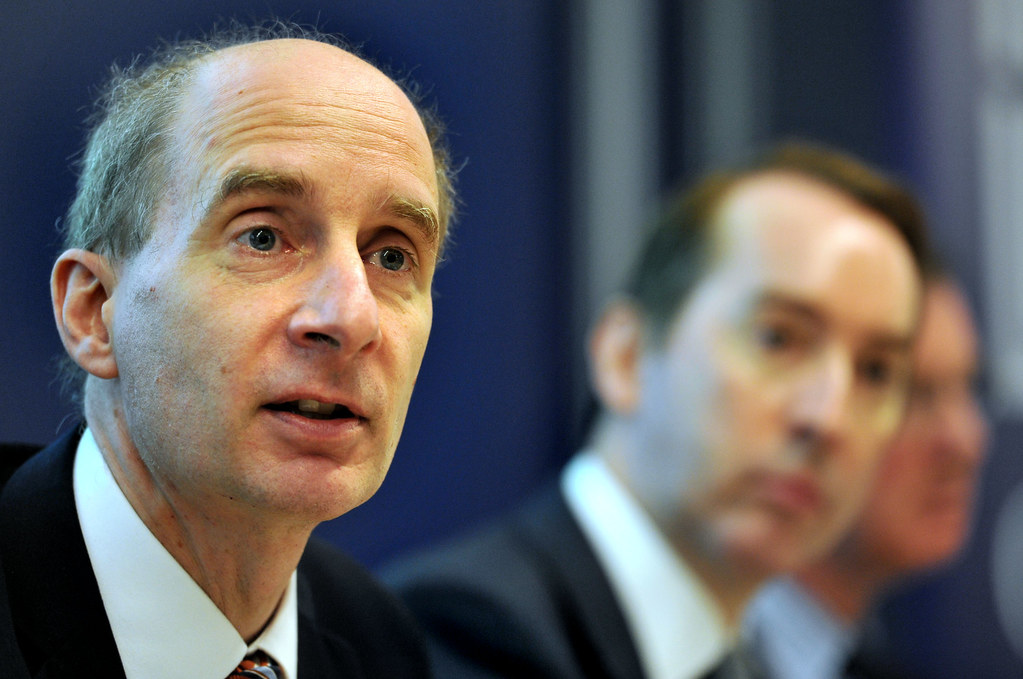
Lord Adonis
As students see their annual fees rise to more than £9,000, with the government promising it will rise with inflation in subsequent years, figures such as Dame Glynis Breakwell, the vice-chancellor of the University of Bath, has seen her annual pay package rise to £451,000. Sir Andrew Likierman, at the London Business School is on £445,000 and Alice Gast at Imperial College is on £430,000. Such figures do appear somewhat eye watering.

According to a study published by the Times Higher Education magazine earlier this year, the average take home package of a vice-chancellor was £257,904 in 2015/16, 2.5 per cent up on the previous year.

Lord Adonis has accused vice chancellors of increasing ‘their own pay and perks as fast as they increased tuition fees’.

In July he wrote:

‘Debt levels for new graduates are now so high that the Institute for Fiscal Studies estimates that three-quarters of graduates will never pay it all back. The Treasury will soon realise it is sitting on a Ponzi scheme.’

And speaking to me yesterday, Lord Adonis predicted that unless universities voluntarily cut their student fees they will be abolished by the next government, regardless of which party is in power. He said:

‘The vice-chancellor pay controversy is directly linked to the tuition fees crisis. The universities have got to start cutting their fees, and they can fund this in part by slashing their bloated senior management salaries and budgets.

'Unless the universities cut their fees, I predict they will be abolished entirely by whichever party is in government after the next election, if not before. The student vote will see to that.’

Perhaps there is an argument that the government has to start somewhere but it currently seems determined to retain the current fees system, dismissing any claims of a crisis, despite students from almost every university now facing the prospect of being lumbered with £50,000 debt after graduating, regardless of the quality of the course. During Jo Johnson’s appearance on the Today programme on Thursday morning is was noticeable the universities minister didn’t raise the matter and was only forced to defend it when it was raised by interviewer Justin Webb.

Universities will face fines unless they are able to justify salaries over £150,000 to the new Office for Students. It’s chief, Nicola Dandridge, was, somewhat hilariously, hired on a salary of £200,000 and has now remarkably ‘volunteered’ to take an 18 per cent pay cut to show the way, reducing her pay to £165,000. (This worthy act of volunteering rather puts me in mind of that old Beyond the Fringe sketch where Peter Cook, playing the role of a senior officer, tells a private: ‘I want you to lay down your life, Perkins. We need a futile gesture at this stage.’)
   
Universities Minister Jo Johnson

Universities, meanwhile, angrily deny any relation between the rocketing of student fees and their own soaring pay packets. They say the pay rates reflect the going rates of the international market and to get the best candidates they must offer the best packages they can.

Pay packets and student fees are hard to separate especially as the standard of courses is so variable and students will increasingly demand a return for the bills many are likely too be paying for the much of rest of their lives. There is a danger the government will be seen to be tinkering around the edges if it only focuses on the salaries of university senior management and doggedly continues to dismiss the problems swirling around tuition fees.

Jeremy Corbyn's intention to scrap the system entirely, mooted before the last general election, may not have been fully thought through and costed but without offering students an alternative, the Conservatives may well, as Lord Adonis predicts, be punished more severely at the ballot box next time.

Wednesday, 5 October 2016

Theresa May; the red and purple Tory PM

Has a prime minister ever had such an opportunity to seize and control the political narrative as Theresa May does currently?

Sure, Margaret Thatcher dominated the political weather of her era but she came pre-loaded with a free market ideology which she applied, with more pragmatism than is remembered, during her time in office. And, of course, Blair swept all aside in his climb to power but, despite the country crying out for a change after 18 years of Conservative rule, he was timid in ambition, still fearful of electoral defeat.

Theresa May, though, is an accidental prime minister and already a lucky one. She is unencumbered by the baggage gathered by David Cameron after a decade of leading his party, emboldened by a Labour Party which seems content for now to wallow in protest populism, meanwhile Ukip seems to be permanently locked in petty, internecine battles. May - who was something of a Teflon-coated Home Secretary - is left clutching a broad, blank, canvas upon which she can paint her own vision for the Conservative Party and the country.

And so, we have her first major keynote speech at a Conservative Party conference as prime minister. Broadly speaking, it was a very successful, clever, speech. Much of it could have been written and said by Ed Miliband, bulked up with a few additions from Nigel Farage, though most of his script had been left with Home Secretary Amber Rudd a day previously. Delivered without fuss from a lectern, Ms May didn't feel the need to display any flashy skills. She didn't take a suit jacket off to show she means business, or memorise the whole speech in an attempt to display her oratorical prowess. Down to earth, unfussy and practical, getting on with the job; that was the message.

While many still struggle to come to terms with the result of the Brexit referendum on June 23rd, Ms May described it as being a symptom of wider issues within society. The vote to leave was about a broader vote for change, 'about a sense - deep, profound and let's face it often justified - that many people have today that the world works well for a privileged few, but not for them'. She went on:

'Our society should work for everyone, but if you can't afford to get on to the property ladder, or your child is stuck in a bad school, it doesn't feel like it's working for you. Our economy should work for everyone, but if your pay has stagnated for several years in a row and fixed items of spending keep going up, it doesn't feel like it's working for you. Our democracy should work for everyone, but if you've been trying to say things need to change for years and your complaints fall on deaf ears, it doesn't feel like it's working for you. And the roots of the revolution run deep. because it wasn't the wealthy who made the biggest sacrifices after the financial crash. but ordinary, working class families.'

Compare and contrast with what Ed Miliband had to say in his conference speech in 2014.

'You see, for all the sound and fury in England, Scotland, Wales, across the United Kingdom, what people are actually saying to us is this country doesn't care about me. Our politics doesn't listen. our economy doesn't work and they're not wrong, they're right....

'Prosperity in one part of Britain, amongst a small elite. A circle that is closed to most, blind to the concerns of people. Sending the message to everyone but a few: you're on your own. See, think about it for a minute. In our economy, it's working people who are made to bear the burden of anxiety, precariousness and insecurity.'

All three paragraphs could easily have come from the same speech. But, while Ed Miliband suffered a humiliating defeat at the last general election, Theresa May is Prime Minister and received a standing ovation. She is busy taking Labour's clothes.

Corbyn himself recognises this. In his own conference speech, he acknowledged that Ms May knew there was a need for change:


The problem Labour and Corbyn faces, though, is that it currently isn't seen as a viable alternative for government. With that in mind, Corbyn is fortunate that Theresa May has ended speculation that she might call an early election for if she did, it seems fairly certain she would be rewarded with an enlarged parliamentary majority. 

Ms May currently faces bigger challenges from within her own party than the official opposition. Many Tory MPs object to the expansion of grammar schools.  There is a cohort of disgruntled Remainers. And the balance of the House of Lords is also still stacked against the Conservative Party. But all this could change. 

The Prime Minister acknowledges that the whole Brexit process will be a 'bumpy' road, the Conservative Party is still split over what Brexit actually means, and if the economy does indeed struggle as many experts fear, it will be this government that is blamed. Moreover, if her fine words remain just fine words and little effort is made to actually seize the centre ground, this will be noticed and Labour could still return there.

The Labour leader has been dismissed many times but he has weathered an almighty battering. It may be hard to imagine now, but, there is no doubt that Jeremy Corbyn has galvanised a movement behind him. Many may not recognise it as the Labour Party they have known for decades, but it is huge in number, over half a million in strength, and could still prove a formidable election fighting machine. The next election, however, remains Theresa May's to lose.

Sunday, 12 April 2015

Wolf in Sheep's clothing - or the other way around?

The country has suffered the greatest recession in living memory, every party admits more painful austerity is on the way after May's election and this state of affairs will have to continue throughout the next parliament if there is a vague chance of wiping out the deficit, let alone the national debt. And yet, judging by their actions of the last few days, the various parties think they're living in clover.

The Conservative Party is acting like a chap who thinks he's the latest Euromillions winner, flashing the cash with abandon, promising his mates all the gifts they could want; only to discover later he got the numbers wrong.

The giveaways have come in a rush: regulated rail fares will be pegged with RPI throughout the lifetime of the next parliament; the NHS will receive the £8billion a year by 2020 which independent experts reckon it needs to keep up with our ageing population; and the next Tory government - somewhat failing to understand the principle of volunteering - would offer 15million workers the opportunity of three days' leave every year to volunteer.

All this is being offered at the same time as the party rules out raising National Insurance and VAT and offers another tax cut to the extremely wealthy through its Inheritance Tax plans.

This is not to suggest these are unpopular ideas (indeed, two of them could benefit me personally hugely - than you George!) but nothing has been offered, by way of explanation, as to how the country would pay for such perks.

And they all come on top of the Conservatives failing to say where £1billion of welfare cuts will come from after the vote. Some might think this would be a rather crucial nugget of detail before deciding which way to swing when voters finally enter the polling booth on May 7,

This campaign of giveaways emerged suddenly after a few days of negative attacks, and negative press especially in the case of Michael Fallon's ferocious attempt at knifing Ed Miliband's character. Perhaps this timing was always the tactic but it does seem abrupt; some commentators have not shied away from calling it panicky. And, there is little doubt, it comes in stark contrast to the fiscal discipline to which George Osborne has consistently claimed his party adhered.

For instance, when Labour suggested a 'tough cap' on rail fares in August 2014, Transport Secretary Patrick McLoughlin denounced it as 'yet another unfunded spending promise' that 'would cost £1.8bn over the lifetime of the next parliament and be paid for by more borrowing and higher taxes'.

When Andrew Marr challenged Chancellor of the Exchequer to explain where the extra NHS funds would come from, all George Osborne would say was that it was 'part of our balanced plan'. So far, all the weight is on one side of the economic see-saw.

Also, as some clever person pointed out on Twitter, if the Conservatives were planning this move, why not actually commit to such spending in the most recent Budget?

Labour has not been much better. Savings have been promised but not nearly amounting to the levels needed to have a credible attempt at tackling the deficit.

In a brazen attempt to steal the Conservative Party's clothes, Ed Miliband will, at the launch of Labour's manifesto tomorrow, commit a Labour government to a new 'Budget Responsibility Lock'.

This, the party explains, will ensure that 'every policy... will be paid for without requiring any additional borrowing' and all parties 'in the future will have their spending and tax commitments independently audited by the Office for Budget Responsibility before a General Election'.

Launching the manifesto, Ed Miliband will declare:

'The very start of our manifesto is different to previous elections. It does not do what most manifestos do. It isn't a shopping list of spending policies. It does something different: its very first page sets out a vow to protect our nation's finances; a clear commitment that every policy in this Manifesto is paid for without a single penny of extra borrowing.'

And he is set to go on, rounding on the Tories for their apparently generous spending commitments.

'In recent days you have seen the Conservatives throwing spending promises around with no idea of where the money is coming from, promises which are unfunded, unfair and unbelievable.

'That approach is bad for the nation's books. And nothing is more dangerous to our NHS than saying you will protect it without being able to say where the money is coming from. You can't help the NHS with an IOU.'

Considering the state of the economy when Labour last left office, it is an audacious bid even to attempt to claim the economic moral high ground. For five years, the Conservatives and Liberal Democrats have called - whether reasonably or not - for Ed Balls and Ed Miliband to apologise for Labour's economic record. That being so it is fairly remarkable that the Labour Party has been given the opportunity to swoop on to this political battle ground and attempt a rebrand. Will it persuade ordinary voters that Labour is suddenly fiscally responsible? Its promise of no extra borrowing is surely a position no government could really maintain if faced with tricky economic circumstances.

Moreover, the insistence on rectitude and the refusal of any 'extra borrowing' neatly overlooks the significant distinction between deficit and debt; and this after we have been carefully introduced, in recent years, to some of the economic and linguistic distinctions nestling within these terms. it is all very perplexing.

The Conservative manifesto is being published on Tuesday; they might need to start offering some answers to all the questions.

All concerned should be aware that Paul Johnson, the Director of the Institute for Fiscal Studies, told The World This Weekend that all parties were 'making up numbers'.

'I've found this entire debate from all the parties really deeply depressing. You've had the main parties ruling out whole hosts of relatively straightforward ways of increasing tax, talking about raising tax from some other group, be they the rich or the non-doms or the tax avoiders, but this is all real money and has real effects on the economy, and no sense from anybody about a serious way forward for the tax system.'


Monday, 23 March 2015

The clock is now ticking

When David Cameron pours himself a glass of wine this evening, kicks off his shoes and sits back to relax, he may feel content that not far in the too distant future, he will be a former prime minister and able to spend decent, quality time with his family. But he may also have a nagging feeling that, by announcing his intention to stand down after a full second term - should he be elected of course - he has unleashed instability and chaos upon an already troubled Conservative Party.

A ten-year tenure as prime minister is enough, as Cameron rightly observed. Margaret Thatcher and Tony Blair had evidently lost touch with reality, to put it politely, by the time they had been in office so long. Cameron, already prone to hubris, is wise to want to escape.

There is, however, no chance that he will be able to serve a full second term. He isn't a president; the Tories will need a new leader for the next general election, currently scheduled to be held in 2020. Instead of quashing speculation that he might stand down after a 2017 in or out referendum on the EU, it seems likely to only intensify such talk. He will constantly be asked when he intends on standing down by any reporter lucky enough to be granted an interview.

And the timing is extraordinary. To announce his intention to stand down just weeks before a general election seems an utterly unnecessary distraction and might actually damage his electoral chances; do the general public want to vote for someone who already has his eyes on retirement?

In true football manager style, Cameron spoke of 'the Theresa Mays, and the George Osbornes, and the Boris Johnsons' who could succeed him. All likely candidates at this stage, certainly, but any successor would need a decent run-in time to stamp their mark on the party before a 2020 poll. And it's worth noting, both May and Osborne hold positions which are vulnerable to political weather and their stars could wane.  As for Boris, whatever his personal popularity may be, he remains a liability.

Other potential successors will inevitably emerge. Liam Fox and Owen Paterson still seem keen to be champions of the Tory right wing but it's hard to imagine either could mount a serious challenge. And the trouble for these two - and for those mentioned above - is that they would have been at the top of their party for a decade or longer. Fresh faces may be required. And, as yet, it's hard to identify likely candidates from the modernising wing of the party. A shift to the right looks likely and potentially dangerous for a party that would have been in power for ten years by 2020.

In the event that the Tories find themselves in government after May, every speech or move made by any likely successor will be scrutinised for any hint of leadership ambitions. Inevitably, these moments will be over-read and misinterpreted. All this turmoil will only destabilise and fracture the party further.

So Mr Cameron should enjoy that glass of wine while he can: he may have just unleashed years of trouble for his party.

Monday, 12 May 2014

Battle of the election leaflets

It is one of the inevitable chores one must address after returning from holiday; sifting through the mounds of post. It wasn't all bad news, there were a few birthday cards, a couple of books I had ordered and a hat, replacing the one currently keeping a very small patch of land dry in a field somewhere in the Lake District. The rest were bills (quickly binned), circulars (swiftly following the bills) and a raft of campaigning material from various parties, all gearing up to the local and Euro elections later this month.

In many ways, the Conservative Party's leaflet was the most interesting. Groovily lower case and called 'intouch', its top headline proclaims 'Time to Turn Penge and Cator Blue: Vote Conservative'. It describes Penge as an 'up and coming area with a vibrant and thriving High Street' and claims Tory councillors would be best to 'resist over-development and protect the unique character of Penge', accusing other parties of being 'obsessed with building more and more cramped housing' in the area.


To describe the High Street as 'vibrant and thriving' is generous to say the least. Apart from some noticable pockets, Penge is proving mightily hard to gentrify. When Woolworths closed it was replaced by a gargantuan 99p shop (followed by a smaller and mercifully short-lived 98p shop). In recent months, at least two banks have closed (the Tory leaflet acknowledges a shortage of banks), along with a Caribbean restaurant. There are several pawnbrokers - always a depressing sign of an area's economic health. The street is frequently strewn with litter, a blight which afflicts the whole neighbourhood and isn't addressed once by the Conservative literature.

As for their claims that they are best placed to protect the character of the area, this seems hard to reconcile considering Bromley Council features just three Labour and three Liberal Democrat councillors; the Conservatives have more than 50. Do these six councillors really impose over-developments upon a cautious council?

A consequence of the make-up of the council is that it is hard for opposition candidates to pledge anything at all in their literature. Indeed, we have received nothing at all from the Liberal Democrats and Labour's leaflet is understandably timid. They acknowledge the litter problem and want to improve local parks and the environment of the High Street. But while they claim they have pushed for more affordable housing, campaigned against the bedroom tax and called for a living wage for council employees, their efforts have either been blocked or ignored. Labour councillors also claim the blocking of an application to turn our local pub into a hostel was 'thanks to campaigning by Labour councillors', forgetting to mention the dozens of well crafted letters of opposition by worried local residents. Ah well, ho hum!

The only other pieces of election literature received were regarding the European elections, one from Ukip, the other from the Communities United Party (CUP). The Ukip one, somewhat disconcertingly addressed to my wife, was predictable enough, with a pledge to 'help you get our country back' though from whom wasn't entirely clear.

As for the CUP, led by Kamran Malik - described on the party's website as 'Legend Leader' - they claim to represent individuals who feel 'at best disillusioned and at worst betrayed by the Coalition government and its predecessors, The Labour Party'. The leaflet said it challenged public authorities on issues such as council tax costs, parking charges and local government spending; indeed, so persistent, or 'truly hopeless', have their challenges been, it was recently issued an injunction from future civil cases with a judge's permission in Newham. Sadly, though, while Mr Malik promises to 'ensure that the voice of the citizens of the United Kingdom is heard at home and in Europe', and some vague comments on taxes and business rates, the leaflet is remarkably light on actual policy.

Judging from these efforts, then, it would seem that the last few days before the election provide partyies with plenty of opportunity to affect opinion.