Wednesday, 17 February 2016

Was Hunt's tweet just an accident?


Members of the cabinet aren’t stupid. They can’t be. They all, to a person, went to top universities, many succeeded in the private sector, all are millionaires in property terms at the very least. Yet on occasions, such as when Liz Truss makes a speech, it is hard to be totally convinced by their intellectual rigour. Another such moment is when Jeremy Hunt does something, like sending an entirely inappropriate tweet during an ongoing trial.

For today, it can finally be reported that Judge Mr Justice Coulson, sitting in the manslaughter case following the death, following an emergency caesarean, of Frances Cappuccini, ordered Health Secretary Jeremy Hunt to remove the offending tweet which said it was a ‘tragic case from which huge lessons must be learned’. He posted it on the second day of the manslaughter trial of an NHS trust and locum consultant anaesthetist Errol Cornish. Her death was indeed a tragic case but the trial collapsed today (28/01/2016) after the judge found they had no case to answer. Judge Coulson said that Dr Cornish's actions were 'as far removed from a case of gross negligence manslaughter as it's possible to be'. In reference to Mr Hunt's tweet, Judge Coulson said: 

'It is highly inappropriate for anybody to pass comment which might be said to know the result of a trial before that result is known. I suppose, potentially, in a very serious case, it could be regarded as a contempt of court. I would hope that everybody would know that.'

And he blamed this inexplicable lapse on there being ‘no lawyers left in the House of Commons’ (there have been pieces on this such as here). It would seem that it is Jeremy Hunt himself who has huge lessons to learn.

But, one does not need to be a lawyer to know that commenting on an active case is completely unacceptable. It's really very basic legal knowledge; it is impossible to think Jeremy Hunt could not have known it is not something that is done, though it is worth pointing out that he is far from the only senior politician to have made such a rudimentary error. 

Jeremy Hunt has been a lucky politician. Most would have been brought down by the inappropriate closeness between himself and Rupert Murdoch’s News Corporation when he was Culture Secretary when he was supposed to be making the quasi-judicial decision on whether to allow the firm’s takeover of BskyB. He survived by the skin of his teeth and was moved to his current post of Health Secretary, succeeding the hugely unpopular Andrew Lansley, who was left bloodied by his wasteful and reckless top/down reform the NHS, the one the Conservatives had promised not to undertake. Rather than playing the role of a pacifier, Hunt has himself become extremely unpopular with the medical profession, especially in relation to the contract he has been trying to force on junior doctors.

While posting this tweet was a simple moment of stupidity by the Health Secretary, it does suggest he had other issues on his mind when he published the tweet. We have already seen his frankly dodgy use of statistics when it comes to weekend deaths in hospitals - by the editor of the British Medical Journal here and excellently covered by Buzzfeed here. One is inevitably left wondering whether Hunt was preparing to politicise the desperately sad case of Frances Cappuccini and use it as another stick with which to beat the NHS and push through further reforms.


Tuesday, 5 January 2016

Corbyn's cabinet chaos will be forgotten, Cameron's EU chaos won't be

Strange days in politics. On the one hand, Jeremy Corbyn was supposed (or so we were led to believe) to be sacking Hilary Benn on the basis he rebelled against his leader during a free vote on whether a handful of British planes should occasionally bomb Daesh in Syria. On the other, we have the sight of a prime minister, suspending collective responsibility within the government, allowing ministers to campaign during the coming referendum either for or against staying within the European Union. Simultaneously, therefore, the government is abandoning any prospect of having a coherent EU policy ahead of a vote.

There is no doubt Corbyn’s handling of the reshuffle has been shambolic at best but in the grand scheme of things it is insignificant. David Cameron’s decision, however, has huge ramifications and he is running the very serious risk of placing himself in the unenviable position of being the prime minister who leads Britain out of the EU.

In 2006, Mr Cameron bemoaned how, while ‘parents worried about childcare, getting the kids to school, balancing work and family life, [the Conservative Party was] banging on about Europe’. Indeed, it has been the dominating item of discussion and division within the Tory Party now for more than 25 years. Cameron doesn’t like to admit it, but he didn’t want to hold a referendum on the matter at all. It was just the latest in a series of concessions offered to Eurosceptics within his own party to try and keep them vaguely disciplined and on-side. Cameron’s desire to reform the EU may be genuine – and, my word, a rather huge amount of reform is surely necessary – but he certainly doesn’t want Britain to leave the organisation.

The latest concession, however, means that Cameron's authority has been seriously dented - and probably not just on the EU either; ministers will surely be tempted to test the boundaries of collective responsibility on other matters too.

The Prime Minster will return from Europe, claiming to have successfully negotiated a new deal; he will recommend that his government, the opposition and voters should choose to tick the box that will keep Britain in the EU. No new deal, though, no matter how overarching and comprehensive, will satisfy the Eurosceptics within his own party - and we shall witness the spectacle of some of Cameron's ministers campaigning to leave the EU. The government will not have an agreed vision for the future of the country.

Speaking to the World at One, Ken Clarke, a veteran EU loyalist, compared Cameron’s position to that of John Major’s during his Maastricht battles in the 1990s.

‘It is just like John Major, who tried to put people in the cabinet to get them to be more loyal, found that it didn’t work, they all briefed against him and were openly disloyal…. David probably has been forced into it because one or two of them (ministers) are obviously already briefing the newspapers and have been for some time.’

Of course, it’s worth bearing in mind that the polls currently indicate the Brexit campaign is losing. And, as we saw with the Scottish in/out referendum, voters are more likely to stick with the status quo rather than feel beguiled by the promise of drastic - but uncertain - change.

But, as pollsters and pundits saw at the General Election last year, predicting the minds of voters is especially hard at the moment. The Guardian recently reported that from the last 21 polls, 13 showed remaining in the EU in the lead, four gave quitting the EU a lead and four were tied. But, such is the overwhelming disenchantment with the major parties, voting against their wishes is terribly fashionable. It remains too close to call.

So, yes, Corbyn's discomfort is probably worth a brief click of the tongue at the wonder of it all, but ultimately, whatever happens to this shadow cabinet, the Right Honourable Mr Benn and others, it will be a mainly forgotten episode, perhaps an unfortunate footnote in a distressing time for the Labour Party. What David Cameron does in the coming weeks and months will have much more momentous consequences. What his decisions mean for Britain's membership of the European Union and, indeed, the long term future of the United Kingdom itself - as a vote to leave the EU may well trigger the SNP to force another Scottish independence referendum - has no chance of being forgotten whatsoever.

Wednesday, 9 December 2015

Trump's views would get surprising support over here

We can all agree Donald Trump is an idiot, or as Conservative Scottish leader Ruth Davidson MSP said, quoting Prince Hal addressing Falstaff in Shakespeare's Henry IV, a 'clay-brained guts, knotty-pated fool, whoreson obscene greasy tallow-catch'. But sadly, that doesn't mean his poisonous gibberish isn't gleefully welcomed by a certain, disaffected community.

So, while more than 100,000 people and counting have signed a parliamentary petition calling for Trump to be banned from entering the UK, echoing calls from MPs like Sarah Wollaston and Tulip Siddiq:


... but a substantial number of people have also signed a petition which could easily be a part of Donald Trump's policy platform:


Sadly, it seems, small-minded, impractical, illogical, racist idiocy is not reserved for absurdly coiffed, perma-tanned, fascist bullies wanting to become US president.


Thursday, 3 December 2015

Salmond should do his homework on Tony Benn

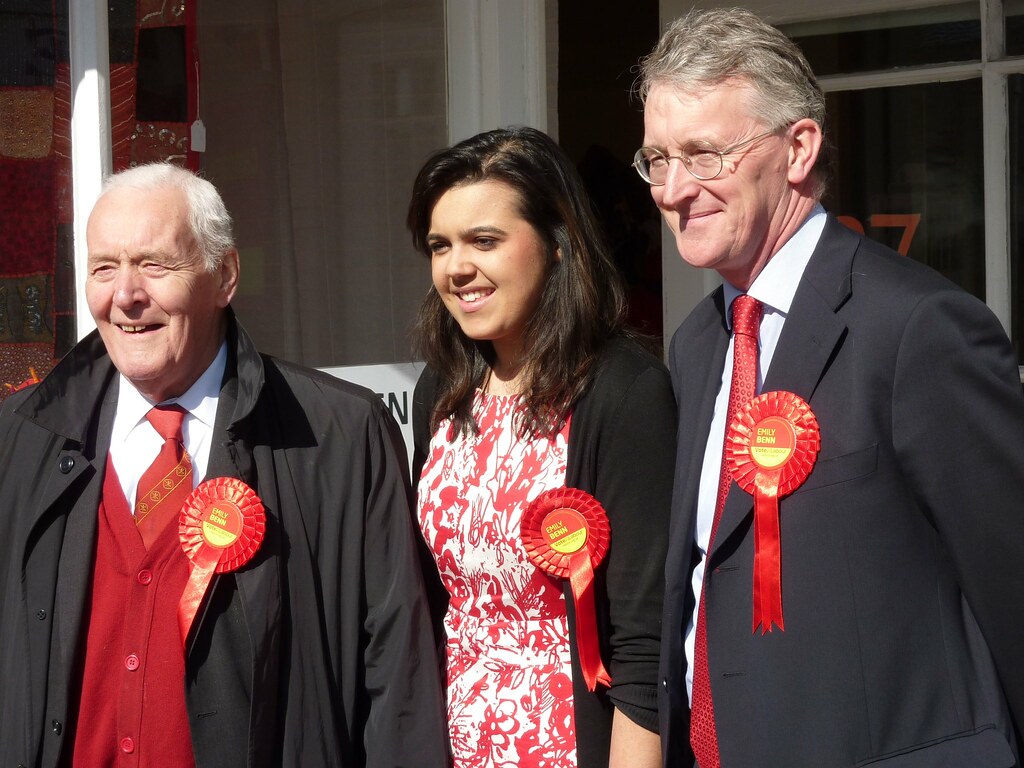
Tony, Emily and Hilary
Alex Salmond, among others, has indulged in some pretty hateful unpleasantness in the wake of the vote to bomb Daesh in Syria last night, claiming that Tony Benn would be spinning in his grave at his son Hilary's support for airstrikes.

Salmond told LBC:

‘I’ll tell you this. His father, whose speech I heard in the Iraq debate all these years ago, would be birling in his grave hearing a speech in favour of a Tory prime minister wanting to take the country to war. That’s just a reality.’

Quite understandably, it has provoked Emily Benn, Tony’s granddaughter and Hilary’s niece, who has demanded the former SNP leader retracts his comments. She tweeted:

‘Mr Salmond, Your comments are both deeply offensive and simply untrue. I hope you reflect and retract them.’

And inevitably, for her efforts, Emily Benn was included in further abuse with some commentators calling the shadow foreign secretary a ‘murderer’ and ‘disgrace’ who should be expelled from Labour.

It strikes me that Alex Salmond cannot be a very good judge of character. He must have met Tony Benn on dozens of occasions and yet seems not to be aware of how immensely proud he was of his son and his progress in the Labour Party.

If Mr Salmond had wanted some hints as to what the late Mr Benn would have made of his son’s speech last night, he could have taken some direction from Tony Benn’s own words in his Diaries when the 2003 invasion of Iraq was on the agenda and the two Benns had very differing views.

For example this is an entry from Wednesday, October 17, 2002:

Turned on the seven o’clock news. Hilary was on – his first appearance as a minister, with a difficult brief, because the aid agencies have called for a pause in the bombing of Afghanistan to get the food in, and Claire Short and Blair have turned it down. Poor Hilary had to defend them, but he was very competent. He said the aid is coming in anyway, and obviously we all hope for the best.’

And as Blair was pushing Britain towards the invasion of Iraq, on March 17, 2003, Benn wrote:

‘Hilary rang me up tonight to talk about Iraq. I told him, say what you really think, that’s the right thing to do. Say what you really think to people because you’re not in the Cabinet. I was touched that he should have thought of ringing me. I think that possibly will have helped him, but he said he might ring me later tonight.’

And then on the day of the actual vote, March 18, 2003, Tony Benn’s entry said:

‘Well, at ten o’clock there was the vote. I haven’t got all the figures, they’ll all be in the records, but about 140 Labour MPs revolted, which was eighteen more than last time, and a majority of backbench MPs, but the Government won overwhelmingly. Then on the second vote against the Government resolution, the Government had a bigger majority. That means the war is authorised by the House of Commons.
‘Hilary obviously had to vote with the Government, and there you are.’

The vote on bombing Syria was nothing like as significant as the invasion of Iraq and yet Tony Benn managed to write just twelve words on his son's voting to support the conflict with no hint of fury or sense of betrayal whatsoever.

Evidence of Tony Benn's immense pride in his son was also palpable when the veteran Labour MP introduced his son to the House of Commons in 1999. As Hilary Benn took the oath of allegiance to the Queen, Tony, sitting on his usual backbench seat, wept with pride. The Telegraph reported it thus:

'as the young man's voice resonated through the Chamber, the veteran parliamentarian, who under all the brimstone is actually a grand old softie, blinked back the tears until they could no longer be kept at bay.'

The writer added that it was 'as charming a moment as we have had for some time'.

And finally, Alex Salmond could always have recollected what Tony Benn - that great anti-Fascist who never failed to 'have a purpose firm' - had called his memoirs; Dare to be a Daniel. I fear, though, the sentiments of that hymn may be lost on the SNP for dissenting voices seem not to be allowed therein. Without exception all SNP MPs voted against bombing Syria, without question or deviation.


Postscript

Alex Salmond has issued a clarifying statement. Unsurprisingly, he didn't apologise at all. This is what he said:

‘ “Birling in your grave” is a well-known Scottish idiom, which means a deceased person would be enormously surprised by the current turn of events. I think it is a fair comment that Tony Benn would have been astonished to hear his son make a pro-war speech in favour of a Tory Prime Minister’s war plans. There was certainly no disrespect meant to Tony Benn, who I held on the highest regard. Not least of which because of his passionate anti-war speeches – for which I was present. The labour Party would be better employed demanding an apology from the Prime Minister for calling their own party leader a “terrorist sympathiser”.’

I'm assured by a Scottish friend his definition of 'birling' is questionable to say the least.

Tuesday, 1 December 2015

A perilous path to an inevitable war

Assuming the House of Commons votes as expected and consents to allowing the RAF to bomb Islamic State (ISIL) targets in Syria, from the furious level of debate going on one would be forgiven for thinking Britain was preparing to deploy a taskforce of the size used in the 2003 invasion of Iraq.

But, instead of tens of thousands of British troops being despatched to the border to gather as part of a massive international invasion force, Britain plans to add a few planes – Tornadoes and Typhoons – to the eight Tornadoes already carrying out bombing sorties on ISIL in Iraq. We are assured that this exceedingly modest force will produce real, tangible results; that we will witness the Brimstone missile – which adorns the Tornadoes but not the Typhoons – accurately decapitating ‘the snake’ with the minimum of collateral damage and those already fighting really cannot cope without our input.

It may be the case that this small increase in airpower does, indeed, make an important difference but there must certainly be a risk it simply adds yet more complications to a perilously messy battleground. And while we wait to see how the military action plays out, the political risks on all sides will remain immense.

There seems to be universal agreement that defeating ISIL cannot simply be done from the air but the motion to be voted on tomorrow rules out deploying British forces - one wonders whether this will remain a firm pledge if there were a Paris-style atrocity in London. Instead, we are, apparently, hoping to rely on 70,000 ‘moderates’ to secure land vacated by ISIL as they retreat from our bombs. There is a great deal of scepticism about this assertion and, in what was an otherwise impressive performance by David Cameron in the House of Commons, it was the closest the prime minister came to a ’45 minutes from attack’ claim. If things go wrong, if little evidence of this force emerges and terror returns to the streets of Britain, it will appear as though Cameron, like Tony Blair before him, massaged the views of the Joint Intelligence Committee to push Britain into another conflict. His authority will be dashed for good.

Moreover, it has emerged on the eve of the debate and vote Cameron has told his MPs:

'You should not be walking through the lobbies with Jeremy Corbyn and a bunch of terrorist sympathisers'

This thoughtless, dim comment blows apart Cameron's attempts to build a broad coalition for bombing ISIL in Syria. There are many differing, and honourably held, views about how to tackle this terror threat but no one taking part in the debate here feels any 'sympathy' for ISIL. It is an astonishingly offensive and foolish thing to say which not only insults vast numbers of people across the country - probably a majority - who oppose further military action but may also galvanise parliamentary opposition on all sides.

For Jeremy Corbyn, it is hard to find anything in his self-destructive handling of the situation about which to be positive. While the debate should be focused on the rights and wrongs of military involvement in Syria, what we might be able to achieve balanced against the inevitable risks of conflict, the centre of attention has been Corbyn and the furious split that has emerged within Labour. Corbyn has a strong mandate and plenty of support within the wider Labour Party as a whole but he is a terribly isolated figure within the parliamentary Labour Party. It is not hard to imagine figures such as Shadow Foreign Secretary Hilary Benn and Shadow Defence Secretary Maria Eagle vacating their positions soon.

As a permanent rebel, Corbyn was never likely to inspire much loyalty from his shadow ministers and when it is so blatantly clear his policies – on matters such as Trident and military action – contradict the opinions of so many of his close team, he was always on a hiding to nothing. While not having a collective policy on the matter of whether the country goes to war or not is a blow to Labour’s authority, offering his MPs a free vote on the matter was always the likely outcome and should have been offered from the outset. Instead we’ve been exposed to Corbyn at one moment trying to be the diplomat allowing debate within the parliamentary party while in another attempting an impression of a tough guy, insisting that he and only he would be deciding Labour policy.

There is no doubt that misguided military action in the region has helped create the stage upon which the ISIL death cult has been able to flourish and we can’t afford another incompetent intervention like Iraq and Libya. We must try and starve ISIL of funds and weapons – as Corbyn has argued – but in the short and medium term this does nothing to stop further attacks in Europe and more terror in their lands. 

It is impossible to present a good answer to this desperate situation. Bombing at any stage will cause civilian casualties, but we see civilians being murdered in horrifically perverted ways on a daily basis by ISIL regardless. Without Syria returning to a stable state the refugee crisis that has swept across the Middle East and into Europe cannot be solved. ISIL can play no role in the future; but fighting them from the air, across a land beset with chaos, seems unlikely to contribute to any sort of stability. Yet, it is at this moment that the UN has called, with remarkable unanimity, for states to join war against ISIL, wherever its war-mongers can be found.  And, whilst ISIL can ignore the border between Iraq and Syria, it makes no sense for those fighting the cult to do the same.  Furthermore, even if our military power is unlikely to make any significant difference to the outcome, our commitment to supporting our close political allies – especially France, at this time of great need – will be valued.  What is more, if we were to refuse to fight in the air over Syria, where Raqqa has been declared the capital of the ‘caliphate’, we would be handing these people a propaganda victory.

And yet, I must repeat: there is no good answer to this desperate situation. I find myself in the odd position of thinking that, were I to have a vote tomorrow, I would probably side with Corbyn, despite little of what he has said influencing my thinking. I would oppose getting involved now on the basis of that dodgy ’70,000 moderates’ claim and the belief that a much more comprehensive international coalition needs to be formed to do the job properly, both during the conflict and, even more crucially, afterwards. 

The only certainty is that we cannot ignore ISIL.  This is a movement inspired by violence and it will not neglect us.  Whatever is to come, we can be pretty sure it will be terrible.  Perhaps the only logical conclusion is to acknowledge that, ultimately, we surely cannot rule out doing the job properly and using British ground forces.

Thursday, 26 November 2015

Livingstone has betrayed his own 7/7 legacy

After the attacks of July 7, 2004, Ken Livingstone gave, what I thought at the time, one of the most powerful, appropriate, significant, moving, unifying, perfect, political speeches of our time. He spoke for wounded, but resilient city.


And yet, the same person last night stated that the bombers that day 'gave their lives' in protest against the invasion of Iraq after the country had been 'lied to' by Tony Blair. Ken Livingstone 'absolved' them


I knew Blair was lying at the time. So did Ken. I went to anti-war events with Ken Livingstone where Kenneth Kaunda and Jesse Jackson were guests of honour in 'London's Living Room' in City Hall. Jeremy Corbyn was at same of the events too. But despite being lied to by Tony Blair over the invasion of Iraq we didn't bomb London. But Ken Livingstone gave them an excuse they didn't have and it was despicable. 

Wednesday, 25 November 2015

Corbyn is avoiding his duty by avoiding Syria

I know the focus was never likely to be on Jeremy Corbyn’s efforts at Prime Minister’s Questions, as George Osborne was unveiling his double whammy, the Autumn Statement and Spending Review all rolled into one. But, Corbyn may as well not have bothered turning up he made so little impact.

It is not that the subject matter of his questions were completely inappropriate – challenging the government’s commitment to green energy and the plight of, and services offered to, abused women – they were just the wrong subjects on the day.

The Prime Minister is preparing to present to the House of Commons proposals, which will at some point be debated, that could see British armed forces going into action against ISIL in Syria. I know that the Labour Party is hopelessly split on the issue, but it falls to the Leader of the Opposition to raise these important issues on occasions like PMQs.

And while the pressure to support such airstrikes is huge – and, speaking personally, I do think we have a responsibility to help try and fix the mess which we are undoubtedly partly to blame for creating – the shooting down of the Russian plane by a Turkish fighter is reason enough to consider pausing for a moment, just to allow for anger to subside, for events to follow their course.

Had Jeremy Corbyn made such a plea, even though David Cameron is likely to have brushed it off, the Leader of the Opposition would have been making a reasonable point, one which would have broad appeal. After all, hastily sending our military in to such a confusing, multi-layered, conflict zone, without detailed talks and agreements between as many of the significant players as possible, is the last thing we should be doing.

But no. Not a word on the matter did Jeremy Corbyn mutter. It was left to the SNP’s Angus Robertson to mention Syria. Sadly for Corbyn, avoiding the issue isn’t going to make it go away.

Postscript

While I'm on the subject of the opposition, how on earth did shadow chancellor John McDonnell put himself into a position where he had to appear on television and condemn the brutality of Chairman Mao? I understand it was supposed to be a gag about Osborne flogging of British assets to a Communist government in China - an attack which has some merit - but to say it fell flat is slightly flattering.

I do quite like McDonnell's style on television; he's quite open and happy to be contrite - some may say he has a lot for which to be contrite - but he should steer clear of attempts at edgy humour.