Tuesday, 29 September 2015

Boris' Tour de France 'no brainer'

Fans of Boris Johnson like to claim that behind that bumbling, buffoonish, Bertie Wooster-esque, façade there is a clever, conscientious politician.

But it has become increasingly hard to be convinced by this argument and with his rejection of London hosting the Grand Depart of the Tour de France, he has acted with staggering unprofessionalism and short-sightedness, damaging any prospect of the race returning to Britain for many years to come.

London went through the whole process of bidding for this stage of the Tour triumphing over places such as Edinburgh, Manchester and cities in Germany. And then, the day before contracts were due to be signed, Transport for London pulled out claiming that it wouldn’t provide value for money.
Boris Johnson has now said pulling out was his call, describing it as a ‘no-brainer’.
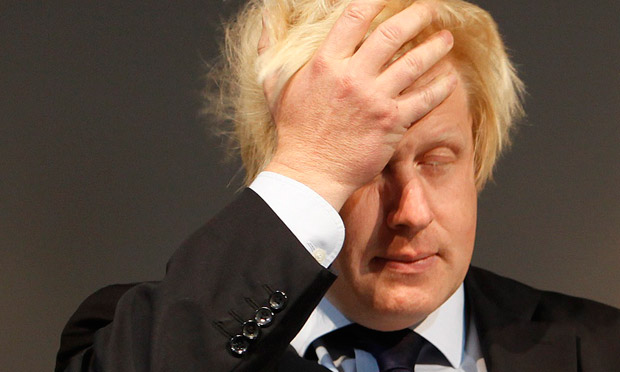
‘I had to take a very tough decision, obviously painful. In an ideal world, you know me, my policy is to have your cake and eat it. The difficulty was we had to make a choice. £35million is an awful lot to spend on a one off when you could put that money in to long term projects. What people really want is safer cycling lanes.’

It’s certainly true that people want safe cycle lanes – something which Boris himself has been pretty reluctant to invest in until recently – but if it was such a ‘no-brainer’ why on earth wasn’t this realised at an earlier stage? What is the point of going through the whole charade of bidding for such a prestigious event when the mayor can so glibly withdraw at the last minute? 

TfL claim that the process didn't cost a penny as it was all done internally; perhaps true, but all the work done on the bid by members of staff has been completely wasted. Whatever else has gone on, there has been a massive failure of process at TfL and within the mayor’s office.

And we must look at this claim that it wouldn’t have proved to be value for money. Spending £35m on anything is certainly a hefty bill but Yorkshire, which hosted the opening stage last year, estimates it has generated £150m worth of wider benefits. There, the event attracted 4.8m spectators; it is hard to imagine it wouldn’t have attracted an even bigger crowd if the peloton had been wheeling their way through London's highways and byways next year.

In TfL’s defence, a spending review is looming and it does face cuts but Boris isn’t exactly averse to wasting money. Christian Wolmar, the transport journalist who recently tried to become Labour’s prospective candidate at the next mayoral election, put together a good little article looking at the money wasted by Boris during his tenure.

Amongst the highlights were:

£300million spent on the New Bus for London, a poorly conceived, terribly designed monster that will lumber around our streets for the next few years. Boris has also spent £10m pursuing his fantasy of an estuary airport, something which was never likely to happen in the first place

£24m on a cable car across the Thames that promised to be a great way for commuters to travel but in fact carries precisely zero commuters. Boris pledged no public money to this, but of course TfL has contributed.

Boris pursued another vanity project to rebuild the Crystal Palace; it involved handing much of a public park over to a Chinese business, apparently ignoring the conventional tendering process and hoping locals would simply be wowed. Unsurprisingly, Bromley Council ultimately walked away after fruitless talks – wasting £150,000 in the process – and Crystal Palace Park was in the sadly all too familiar position of missing out of millions of pounds from the Heritage Lottery Funding as a consequence of Boris’ misadventure.

TfL has also pledged £30m to build the Thames Garden Bridge (along with another £30m from the government) despite promises, again, that public money would not be used. Again, the whole project appears not to have gone through proper tendering processes.


In comparison to the above, therefore, spending £35m, with the likelihood of greater, and wider, benefits down the line, doesn’t seem such a bad idea.

But what makes the decision all the more inexplicable is that one of Boris’ genuine achievements as mayor has been his ability to sell London around the world. Yet this tangible success – one which has the capacity to provide a legacy for the future – has been foolishly set back by cancelling the event in such a last minute, casual fashion.

It is clear that the Tour de France owners, Amaury Sport Organisation (ASO), are angry at the withdrawal – the bidding process would undoubtedly have cost them time, money and effort – and they are hardly likely to look at future bids from London, or elsewhere in the UK, with much sympathy. And other sporting organisations too will look at London with sceptical eyes, wondering whether it’s worth dealing with the city if there is a chance it might pull out at the last minute.

Boris’ legacy has been looking flimsy for some time but a future major will not thank him for this genuine damage to London’s reputation as a city which can stage major international events with competence, confidence, success and flair.

Wednesday, 9 September 2015

Until Syria is rebuilt, what choice is left?


The ultimate goal, as Europe deals with the migration crisis that is suddenly sweeping the continent, must be to restore peace in Syria and help make it a country to which people feel safe enough to return.

Tragically, this country, which was so recently functional, civilised and well developed – albeit one ruled by an hereditary dictator – has disintegrated. Both ISIL and President Bashar Al-Assad are unleashing unspeakable terrors upon the people, four million of whom have fled the country and a further 10million are displaced within its borders.

And, as these refugees flee, into Jordan, Lebanon, Turkey and beyond, they join other refugees fleeing other places of conflict in Libya, Eritrea and South Sudan, as well as economic migrants; a massive movement of people mostly desperate for, as Stella Creasy said in the emergency debate yesterday, ‘the chance to stay alive’.

This is the situation that David Cameron and Europe face. While Angela Merkel and others have started welcoming refugees for humanitarian and other more prosaic reasons, it’s hard not to conclude that the prime minister’s response has been directed by a contradictory mess of politics.

It can only be a good thing that Cameron’s government wants to take in 20,000 vulnerable people who have fled to refugee camps from Syria by 2020, but at 4,000 a year this is a pitifully small number, especially compared with Germany which is contemplating 800,000 migrants this year and a further 500,000 in subsequent years. Germany welcomed 18,000 refugees last weekend alone.

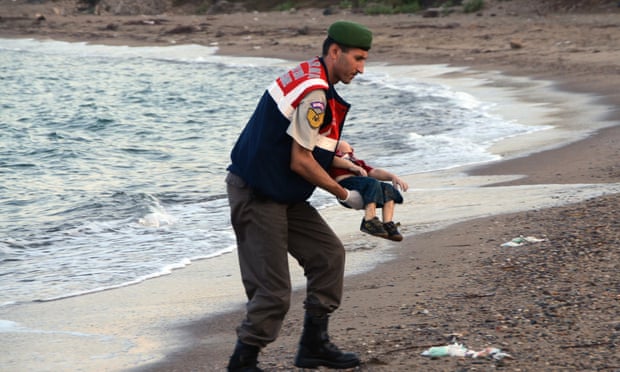
There seems little doubt that the prime minister and his government were caught flat-footed by the outpouring of anger and grief triggered by the decision of several newspapers – including my own – to publish the photograph of the dead Aylan Kurdi on their front pages; yet, hopes that the 20,000 pledge would be enough to see off his critics already seem misplaced. And Cameron’s stance does nothing to deal with the situation facing Europe now.

In many ways, the prime minister is in an unenviable position. On the one hand, he doesn’t want to be seen to be doing anything which might smack of co-operation with our European partners in case it provides any ammunition for those in his own party who want to leave the European Union - many of whom are also prominent campaigners against high immigration. On the other, Mr Cameron will be only too well aware that his EU partners are urging Britain to do more to alleviate the refugee disaster within Europe’s borders and he must fear that his determination to exclude this country from any shared willingness to offer a safe harbour to refugees threatens the progress of any future EU negotiations.

But, as the circumstances change, our response must change. Cameron is right when he says a solution cannot simply be achieved by taking in more refugees. And he is clearly aware that any solution has to be multi-faceted. 

The prime minister may feel sore about his failure in the last parliament to command support for attacking Assad after he used chemical weapons in the conflict in Syria. But, without parliamentary approval, we now learn that action has been taken in Syria anyway, with a fatal drone strike on British terrorists there. International co-operation is essential and enlarged military action of one sort or another – against both Assad and ISIL – now seems increasingly inevitable.

But simultaneously, Cameron might be better to try and rise above the messy political complexities, take a lead in parliament, and respond to the imperative need for human kindness closer to home now.

Those who argue against allowing more refugees into the country, have a favourite question to which they often return, 'well, how many should we take?’ It is an impossible question to answer. The British government has done much to support refugees in the Middle East, spending more there than any other European country. But the crisis has developed and moved. Ignoring the situation in Europe is not part of a solution.

Britain cannot keep on claiming to be an honourable place of refuge on account of the Huguenots who flocked here in the 16th and 17th centuries . It cannot even do that on account of the Kenyan Asians who arrived here from the late 1960s. As Robert Peston has noted, Germany’s motivation to taking so many migrants is not wholly humanitarian; their population is ageing and falling, a boost in younger workers is just what Germany needs.

Similarly, we need to take heart from the very significant benefits this country has accrued from our own, historic refugee influxes and recognise that being properly generous, now, could bring its own reward in the future. But ultimately, the demand to act, to work with our European counterparts to tackle this wretched situation on our doorstep, is a simple one; the humanitarian need is here and now.

Tuesday, 4 August 2015

Paying 0.003 pence a day too much towards failed asylum seekers

Failed asylum seekers have cost the country a whopping £73million in the last year; that means every person has paid the equivalent of about £1.14 a year to support these illegal spongers. Across the year, that’s just over a pocket bursting 0.003 pence a day for each of us.

The £73m figure has been released by the Home Office - and it is the first time it has been released -  to coincide with the government’s ‘consultation’ on its plans to axe benefits for those who remain in the country after their application to remain has been refused.

In the last year, this support was provided to just over 15,000 asylum seekers, and their dependents, who had their application refused, up from about 9,000 the year before.

Of that sum, £28million goes towards about 4,900 failed asylum seekers who 'would otherwise be destitute' and if they meet certain other conditions, such as a medical reason for not being able to travel.

A further £45million supported about 2,900 families who, under the current legislation, continue to receive help if they have a dependent child.

Currently, a migrant can receive a £36 weekly allowance, as well as accommodation, the moment they claim asylum in the UK and it continues for thousands after an application has failed.

Apparently, according to the government, this level of generosity is 'wrong in principle and sends entirely the wrong message to those migrants who do not require our protection but who may seek to come to or remain in the UK in an attempt to benefit from the support arrangements we have put in place for those who need our protection'.

Instead, the government wants to stop support for those who don't leave Britain after their claim is rejected, unless there is a 'genuine obstacle' preventing them from returning to their home country. Safeguards will remain for children, the government insists, but for families their benefits would cease after a grace period of 28 days.

The government believes the current system 'creates an incentive to remain in the UK unlawfully'.

As the migrant crisis continues, the government is doing all it can not to mention the word refugee; it appears to hope that no one will cotton on to the fact that many of those trying to cross the Mediterranean and the Channel, are fleeing war torn places like Syria, Libya, Eritrea, Somalia, Afghanistan and may well have genuine reasons for seeking refuge. Instead, the implication is that many of these might be making such a perilous journey for this egregious £36 a week. 

Obviously, it is right that those who fail to secure asylum return to their point of origin, if possible, but for the sake of 0.003p each a day, is it really a mark of a humane society to deny pitiful amounts of support for families and those threatened with destitution?

And, if failed asylum seekers are not deported - which would not be an enormous surprise judging from the country's long experience of our inept border services - how would they be supported? 

This effort to make 'savings' might not only be counterproductive and unpleasant, it is yet another example of the government fiddling and grasping for easy headlines rather than trying to take effective action.

Wednesday, 29 July 2015

Calais situation shouldn't be a surprise; it's a symptom

There has been no attempt by the government to tackle the on going migration crisis we are witnessing on our screens on a nightly basis. Meetings are held, pitifully small amounts of money are proffered with embarrassing amounts of pride, unpleasant fences grow higher and the situation continues without being disturbed.

The current chaos in Calais is a symptom of the British government, and its European counterparts, failing to cooperate and formulate a coherent policy to deal with the world's greatest migrant crisis since the Second World War.

We are not witnessing clamouring masses desperate to access the UK - or, in more significant numbers, Germany and Sweden - because of our generous benefits system, the promise of a house, or jobs, or vague security; the primary reason behind this mass movement of people is war.

And European governments hope we just won't notice.

For vast numbers of these migrants are refugees fleeing violence in Syria, Libya, Sudan, Somalia; Theresa May may talk of returning people to their home countries, but to those mentioned above we simply can't. The British government are trying to avoid their international responsibilities and ignore the refugee situation; taking responsibility, it seems, is too much of political cost.

There is no legal means for these refugees to access any possible host country in Europe currently. Trying to storm the Eurotunnel is little of a challenge when compared with the horrors so many have endured.

Greece, Spain and Italy are bearing the greatest burden. And is it any surprise that France might be dealing with the situation in Calais so ineptly in the vague hope that the British government might share some of the burden.

And it's not as though several British governments do not bear some responsibility for the anarchy we are currently seeing in the Middle East and North Africa.

I'm aware I am sounding like a stuck record; I've said the same before about the government's shameful, pathetic, cowardly, inept and short-term politicking on this issue  This abject derogation of duty, however, makes me continually furious so it can't be said enough.

We should all be ashamed by their actions.

Thursday, 9 July 2015

Osborne apes Brown at his barnstorming best


For the best part of ten years, while he was at the Treasury, Gordon Brown dominated the House of Commons and every year he blunderbussed his Budget at an expectant nation.

Growth figures were bombastically rattled through, his hubristic ‘end of boom and bust’ slogan was wheeled out to the delight of his Labour backbenchers, rabbits were theatrically pulled from top hats, elephant traps were carefully laid and the Leader of the Opposition was invariably left on a tricky wicket, clutching a bat broken by the opposing team’s vice-captain.

And the youthful George Osborne clearly watched these performances with a mixture of horror and awe; he may not have agreed with Brown’s policies, but he clearly enjoyed the performance as the former member for Kirkcaldy provides Osborne with his template.

Osborne has been a lucky chancellor. During the coalition government, the economy came mightily close to a double and triple dip recession and growth was painfully stagnant. He missed his own deficit targets time and time again and few but the wealthiest could actually feel the benefits of whatever growth there was.

But, he held his nerve and has been rewarded. The economy is growing at a healthy rate, jobs are being created – albeit too many at too low a wage – and yesterday (July 8) he was able to deliver the first Conservative-only budget since Kenneth Clarke rose up on his hind quarters in November 1996.


Osborne has moved on since his disastrous pasty tax Budget and this was his cleverest yet. While there were the predictable crowd pleasers like the inheritance tax changes, reduction of the benefits cap, defence spending pledges and promising a surplus by 2019/2020, he made quite a bold pitch for the political centre ground.

Osborne’s Living Wage, while not actually at the level of the living wage, was a spectacular rabbit to pluck from the hat; such a whopper it was almost a hare. For those on the minimum wage, aged 25 or over, it means their pay will jump by 70p an hour – to a not insignificant £7.20 – from April and would reach £9-an-hour by 2020. Before the General Election, Labour only pledged that the minimum wage would rise to £8 over the course of this parliament; no wonder George Osborne was being cheered to the rafters by his backbenchers.

Increasing the tax free personal allowance, promising a rise in NHS spending and abolishing non-dom status for people born in Britain to parents domiciled here, could also have come from any party.

Such was the nature of his bravura performance, one would be forgiven for thinking all was fine and dandy with the economy. The clouds over China and the chaos engulfing Greece seemed a long way away and the still fragile nature of the economy could almost be forgotten. Just weeks ago, one Tory MP told me he feared the economy had already reached the crest of the wave now and worried about the next few years, especially considering the country’s enormous debt. But today, these concerns were put to one side.

Yes, while giving with one hand, Osborne was taking with another, like every chancellor before him. Those relying on tax credits will feel the pinch particularly, especially those under 25 years-old; now is not a good time to be young. But again, Labour will struggle to fight against tax credit changes and will not reverse them if and when they get the opportunity.

Unlike Gordon Brown, Osborne is not a Son of the Manse; he isn’t naturally infused with the oratorical skills and moral authority of a church minister. But, with his stature enhanced by the illustrious nature of his office, few are able to command the House of Commons as he does.

Harriet Harman responded for Labour; famously acknowledged as the hardest job of the year for the Leader of the Opposition. She did her best, but one thing she did get absolutely spot on was her acknowledgement that this Budget was as much about Osborne’s ambition to succeed David Cameron as it was the economy. And it is impossible to conceive Boris Johnson delivering as wily and assured package as George Osborne did today. Once again, the likely successor to our current prime minister is his next door neighbour.


Monday, 6 July 2015

Greece versus the prevailing economic hegemony

For ten minutes, over fresh drop scones and orange juice, I almost managed to train my two-year-old daughter to say ‘the Greek vote is counter to the prevailing economic hegemony’. What a great party trick that would be.

Trouble is, she struggled to pronounce ‘economic hegemony’ with any great fluency so it’s a game to be saved for another day.

In Greece, meanwhile, Alexis Tsipras’ left-wing administration has been dealt a remarkable democratic boost following yesterday’s referendum, but it remains to be seen whether this will ultimately help to deal with the ‘prevailing economic hegemony’ with which it is battling. And such is the parlous state of the country’s banks, it has very little time to find a deal.

Yes, there are democratic deficiencies in the whole referendum process; as Peter Kellner of YouGov observes. For such a vote to have true democratic accountability  it needs, he argues to follow these principles:


It is clear the Syriza government in Greece breached many of these; but such was the scale of the victory, Tsipras and his administration have received a huge mandate for their confrontational stance against the Eurozone. As of today (July 6) five parties have rallied behind the prime minister's position, including opposition parties, forming an impressive domestic coalition. Those querying the legality of the vote, such as European Commission vice-president Valdis Dombrovskis, will only play into Syriza's hands further, allowing them to portray Greece as the conspired against victim of the piece.


In truth, Greece finds itself in its current wretched state as a combination of its own long-term, systemic, failings and the complicity and ineptitude of the European Union. Why, for example, was Greece admitted to the Eurozone club back in 2001? Who would have guessed that drenching a country, famous for governmental corruption and woeful levels of tax receipt, with cheap credit would end so disastrously?

In the Financial Times, in December 2000, Tony Barber explained how Greece's admission was more to do with 'political symbolism than economic consequences' and that Greece would:

'serve as a beacon for central and eastern European countries, which hope they will not have to wait long after joining their European Union before they, too, can abandon their national currencies for the euro'.

Efforts to delay Greece's entry on the basis that the country 'did not meet the criteria for low inflation and budgetary discipline in a sustainable way' were swatted aside.

The Greek government's lack of 'budgetary discipline' is legendary. The Economist wrote in a 2012 article that tax evasion was routinely shrugged off by officials as 'a national sport' and it cited a recent study which found that up to €30million of tax revenue went missing annually. As recently as 2010, a study using satellite photographs to count the number of swimming pools in Athens - a measure tax inspectors use to indicate wealth - found that instead of there being 324 as officially declared, there were, in fact, 16,974. Covering pools up with nets still remains a favoured tactic to evade such monitoring. 

In 2012, a list was published of 4,151 Greek celebrities who, collectively, owed the Greek state £12.4billion in unpaid taxes.

And only in recent years has the absurdly generous pensions system been reformed, which once counted jobs such as hairdressing as a hazardous occupation and enabled a barber to retire at the age of just 50. These reforms still have far to go, however.

In the early years of Greece's membership of the Euro, its economy boomed but in every year since 2001, it registered budget deficits of over three per cent, reaching a peak of almost 16% in 2010. In the same period, debt as a percentage of GDP, has risen from 108% in 2001 to almost 180% now. When George Papaconstantinou became finance minister in 2009, he was forced to disclose the budget deficit was almost double the estimates given by the previous right-wing administration; Papandreou's socialist government was thus nobbled from the start.

As the crisis has reached a climax, I've heard comparisons between Greece and the experiences of coping with debt by Iceland and Ireland, but these latter two are blessed with comparatively functional political systems; any such comparisons are, therefore, rendered invalid.

Since their entrance to the euro club, therefore, the dysfunctional country has piled debt upon debt; its credit rating has been shot to pieces; it has received loans and bailouts from the IMF and the EU; and yet growth - the only means by which Greece might escape this mess - has stubbornly refused to accelerate. There have been flickers in the last few years, but nothing more vigorous.

Meanwhile, in June 2013, the IMF admitted they hadn't foreseen how much damage the austerity programme would wreak upon Greece and only last week a report - which the Eurozone tried to block from publication - acknowledged Greece's public finances had no chance of recovery without significant debt relief. 

Grim though it may be for the people of Germany to concede, until the eurozone recognises this reality, Greece will remain in turmoil and will not recover.

Fundamentally, what we are witnessing is a clash between democratic power and harsh economic realities. There is no doubt Tsipras has reinforced his position domestically - and could inspire other left wing movements such as Spain's Podemos - but with a lack of a deal this will fade. The Greek Prime Minster's pledge that a new agreement with the EU would be signed within 48 hours of the referendum seems absurdly optimistic. At the same time, the Eurozone may wish not to acknowledge the power of the people, but ultimately knows it must do to an extent to avoid the very real possibility of Greece plunging into disorder. 

And yet, the Eurozone holds the strongest cards. If the banks have no money, the people of Greece will be unable to buy food, medicine and other essential supplies. Even leaving the eurozone doesn't necessarily prevent this from happening as a new currency would take time to organise. The prevailing economic hegemony, no matter how ugly and discredited, ultimately has the power to drown this nation's democratic voice and set a very worrying precedent indeed.

Tuesday, 16 June 2015

The Labour leadership battle isn't a beauty contest


Debate is good, debate is healthy, debate is just what a political party needs after a hefty election defeat. And some Labour activists need to get a grip as many, with Dan Hodges as the standard bearer, seem to think Jeremy Corbyn's inclusion on the leadership ballot is a sign of an unprofessional party as he is simply 'not ready' to be Prime Minister (Corbyn is, for the record, 66).

It is an absurd, anti-democratic, argument. And even if it were true, it isn't unique to Labour; the Conservatives elected Iain Duncan Smith as leader and even John Redwood had a pop.

Yes, Corbyn only got on the Labour leadership ballot as several of his comradely MPs lent their support and nominated him. But this only recognises, whether certain members like it or not, that he represents a not insignificant body of opinion within the party. Surely the hope of the other candidates is that by including him in the debate his more eccentric ideas can be exposed and anything of value can be swiftly co-opted by a candidate more likely to be successful. And, of course, by having the debate, those on the far left will not feel the need to cut their ties to the party altogether. It's a simple method of securing a few votes in the future.

Those arguing that he shouldn't be on the ballot seem to me to struggle to put forward a coherent argument. Yes, it may be the case that it is indulgent of the Labour Party and it may also be that he would take the party to an even more unelectable position, but these remain matters of opinion, not rules of law. This shouldn't, therefore, deny Corbyn of a voice.

Should he, therefore, be banned from standing? Should he and his supporters be the victims of a purge, like Militant all those years ago?

Some even argue that a leadership contest is not, in fact, a debate at all and here I'm lost. If it's not a debate what is it? Should the leading candidates simply agree on the main issues and let the contest be a judgement on physical beauty instead?

As I've argued before, the Conservatives will have their own problems at the next election as they'll either have a new leader with the baggage of 10 years in government - which rarely does them much good - or they will have a new leader without the personal appeal of David Cameron. The emotional spasms currently afflicting the Labour Party were an inevitability after May 7, but, in the main, they are recoverable (Scotland is a different matter).

Despite the best efforts of a few on the right trying to have a jolly good laugh by ironically signing up as Labour supporters just to give Jeremy Corbyn a boost, the Honourable member for Islington North won't win the Labour leadership. In a few months this will all be largely forgotten by the electorate, who, for the main, have no interest in the internal politics of our major parties. And, if anyone does remember, they'll wonder what all the fuss was about.